Introduction
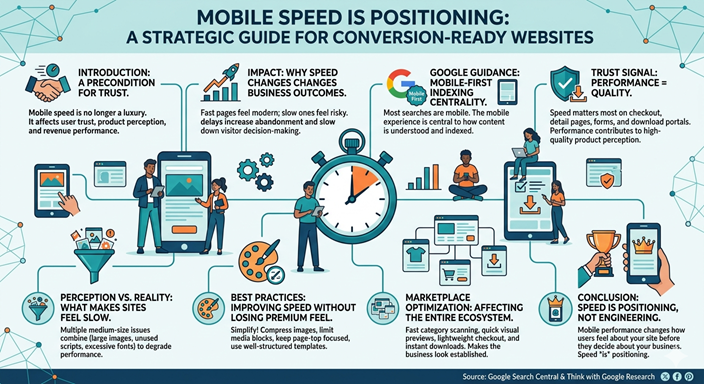
Mobile speed is not a technical luxury anymore. It is part of user trust, product perception, and revenue performance.
When people land on a website and it feels slow, they rarely analyze why. They simply assume the experience is weaker. That affects confidence before they even read the content.
Why Speed Changes Business Outcomes
Fast pages feel modern. Slow pages feel risky.
Think with Google’s research has long shown a strong link between slower mobile experiences and higher abandonment. This is especially important for digital marketplaces, product catalogs, and service websites where visitors compare multiple options quickly.
If your site delays the decision-making process, users often leave before you get a chance to persuade them.
Why Mobile Speed Matters Even More Than Desktop Speed
Google explains that most searches are now done on mobile devices, and its mobile-first indexing guidance makes the mobile experience central to how content is understood and indexed.
That means mobile is not simply a secondary version of the site. It is the version that often matters most for discovery and first impressions.
Common mobile friction points
- oversized hero images
- heavy sliders
- too many animations
- large scripts from external tools
- visual sections with no functional purpose
Speed Is Also a Trust Signal
People trust clean, quick experiences. They distrust experiences that hesitate, shift, or feel unstable.
This matters especially for:
- checkout pages
- template detail pages
- marketplace listings
- quote request forms
- download portals
When your site is selling digital products, performance contributes to the perception that the products themselves are high quality.
What Actually Makes Sites Feel Slow
Many websites are not slow because of one big issue. They are slow because of many medium-size issues combined.
Examples
- multiple large images loading at once
- unused scripts for widgets that are barely visible
- too many fonts or font weights
- image sections repeated without clear value
- design choices that create visual clutter
Performance is often improved as much by simplification as by technical tuning.
How to Improve Mobile Speed Without Losing Premium Feel
You do not have to make the site look plain. You just need to be selective.
Best practices
- compress and resize images before upload
- limit the number of large media blocks per page
- use animations only where they add meaning
- keep the top of the page focused and lightweight
- use templates that are already well structured
A premium-looking page should feel confident, not overloaded.
What Speed Means for Marketplaces
If you operate a marketplace, speed affects more than one page. It shapes the entire ecosystem.
- category pages should remain easy to scan
- product pages should load visual previews quickly
- checkout should feel light and direct
- download pages should feel instant and reliable
When these parts work together well, the business looks more established.
Speed and SEO Work Together
Google’s guidance for getting discovered in Search includes making content load quickly and display properly on all screen sizes. So speed is not only about user behavior. It also supports discoverability and overall site quality.
Fast, usable pages make it easier for users and search engines to trust what they find.
Conclusion
Mobile speed matters because it changes how people feel about your website before they decide what they think about your business.
When performance improves, the site feels more premium, more trustworthy, and more conversion-ready. In that sense, speed is not just engineering. It is positioning.
Sources and Further Reading
- Google Search Central — How to get on Google
- Google Search Central — Mobile-first indexing best practices
- Think with Google — Mobile speed research and guidance
Ready to Build Faster?
Explore premium-ready templates, practical business lessons, and marketplace products designed to help you launch with confidence.